A proper tasting takes about a minute. Five steps, do them in order and you will get more out of a cheap dram than most people get out of an expensive one.

Dramfly
2 mins read
Tasting culture
Why the ritual matters
Picture this. You're at a bar. You order a twelve year old single malt. It costs you eight pounds. The bartender slides it across the wood. You knock it back like tequila. It burns. You chase it with a beer.
If that sounds familiar, you're not bad at whisky. You just don't have a framework yet. You paid eight pounds for that liquid. You can afford to give it a minute.
Tasting isn't about finding notes of unicorn tears or naming the precise latitude of the distillery. It is about slowing down enough to actually get your money's worth. Here is the framework we use.
Step 1. Look
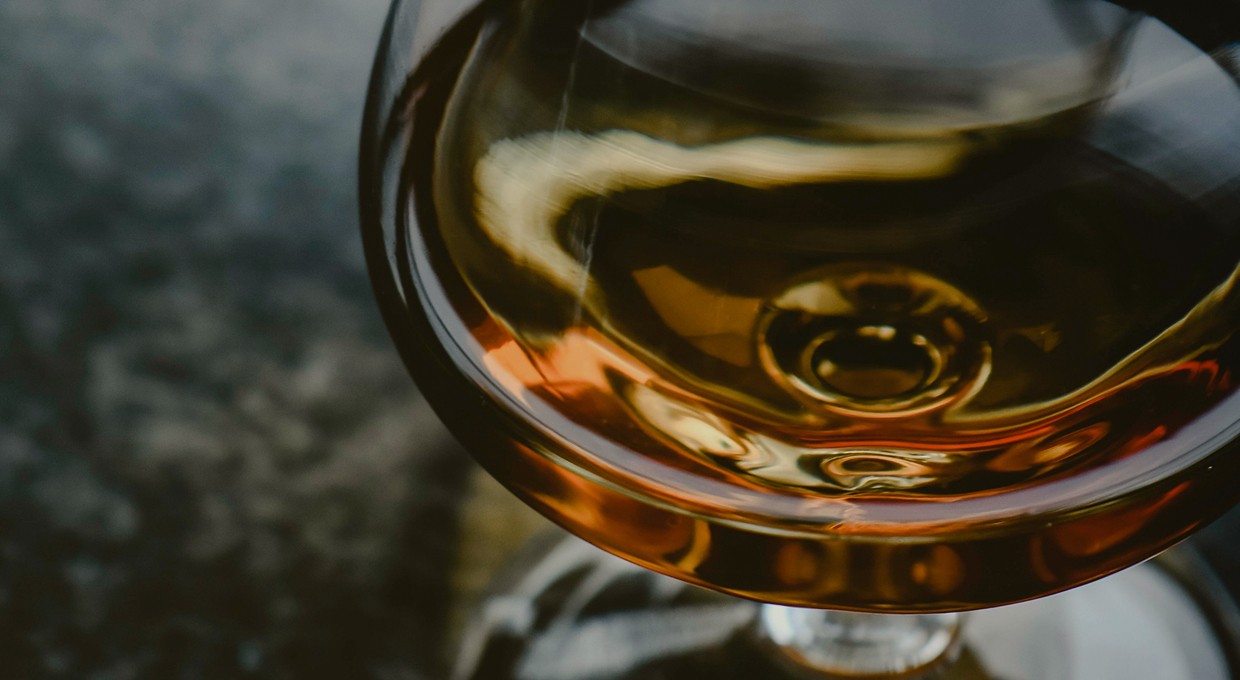
Hold the glass up to the light.
Pale straw usually means ex bourbon casks. Expect vanilla, caramel, coconut.
Deep mahogany usually means sherry casks. Expect dark fruit, Christmas cake, leather.
Amber is somewhere in the middle, often a mix of both.
Be aware that some brands add E150a, a spirit caramel, to darken the liquid. Use your eyes, but trust your tongue.
Step 2. Nose, gently
Your nose does about eighty percent of the work. The mistake everyone makes is jamming it deep into the glass and inhaling like they are inflating a balloon. All that gets you is alcohol vapour, which torches your receptors and turns everything into booze.
Approach gently. Short sniff at the rim. Pull away. Repeat. Let your brain catch up between sniffs.
Now ask yourself what you smell. Fruit. Smoke. Sweet. Spice. Something from childhood. Don't overthink it. If it smells like grandma's kitchen, say grandma's kitchen. Your brain stores smells as memories, not as textbook entries, and nobody is marking your paper.
Step 3. Chew
Let the whisky sit on your tongue. Move it around. This isn't weird, it's giving your taste buds time to wake up and register what the liquid actually feels like.
Texture. Watery or oily. Thin or coating.
Taste. Sometimes the smell says toffee and the taste screams pepper. That contrast is where the fun hides.
Step 4. Finish
The flavour that lingers after you swallow is called the finish. It is where great whisky separates from cheap whisky.
Short. Gone in five seconds. Forgettable.
Medium. Hangs around for twenty seconds. Solid.
Long. Still on your palate a minute later. The good stuff.
Step 5. Decide
This is the step everyone skips, which is why nobody can remember anything the next morning. Ask yourself the questions that matter. Was it balanced. Did the peat punch. Would you buy a bottle. Would you pour this for a friend.
Lock it in before you forget
This is where Dramfly was built to close the loop. Snap a photo. Tap a few flavour tags and rate it in thirty seconds. Three months later when you are standing in a shop wondering which smoky one you loved, you'll have the answer in your pocket.
Next time you're handed a dram, resist the urge to knock it back. Look, nose, chew, finish, decide. You'll taste more, remember more, and waste less money on bottles you won't finish.
